

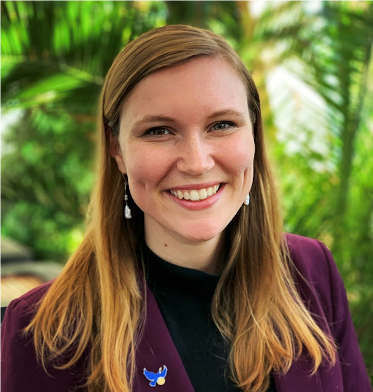
Greetings from Seattle, District 7850! With support from the district, I served as a Rotary Peace Fellow at the University of Bradford in England from 2019 to 2020. In some ways, the upheaval of COVID-19 during my fellowship hardly feels like almost six years ago. In other ways, it feels like we’ve experienced persistent uncertainty, as COVID and ongoing geopolitical conflicts become day-to-day backdrops for new and emerging challenges.
Amid these overlapping societal challenges, one thing I’ve been focused on is channeling my energy into local outlets for positive change and the “think global, act local” approach. I often get stuck worrying about issues I cannot change, so I’ve tried to be intentional about where I can move the needle in my communities, much like Rotary clubs’ good work.
One of those efforts since my Rotary Peace Fellowship has been sharing my learnings for new audiences. As a former intelligence analyst, I love open source intelligence that turns information into actionable insights but often prefer working behind the scenes.
I challenge us all to think about how we can get out of our comfort zones and where we can use our voice to connect with others, especially those we might not otherwise encounter. At a time when many are questioning whether AI generated content and its veracity, trustworthy voices and person-to-person connection are all the more important.
This year, I published two very different chapters as part of book projects. Both fell under the thematic umbrellas of democracy and information integrity, though they serve different audiences. One chapter, originating from my Rotary Peace Fellowship’s dissertation, is primarily for a research and academic audience and is openly accessible on the Cambridge University Press website. The other project centered everyday readers, with our editor continually reminding us to use anecdotes and a conversational tone intermixed with our research findings about overcoming information chaos.
My hope is you will consider where you can best use your voice–or uplift other voices–next. Is it by pitching an opinion piece to your local paper about an issue you cannot stop thinking about? Is it finding open calls for book chapters and deep diving into a topic you care deeply about and would love to dig into to think through possible solutions? Is it writing a piece for the next newsletter on something that deserves airtime but slipped through the cracks in our overwhelming information environment? Is it a coffee chat encouraging someone who hasn’t considered these options to put their expertise out there and offering to edit their first draft? Is it fostering a new partnership or uplifting work from organizations like the Committee to Protect Journalists or the International Women's Media Foundation?
Writing for public spaces isn’t without its risks, especially on sensitive topics or for authors from vulnerable communities, so consider the implications before diving in. But we are at a critical moment where the information environment is only going to get more complex with AI and emerging technologies, and there is much to be said for the importance of trustworthy institutions, individual action, and service above self in today’s landscape.
Rachel Brooks-Bitterli is a District 7850-supported Rotary Peace Fellow alum of the Bradford program in England. She currently works in risk management and lives in Seattle with her partner.